


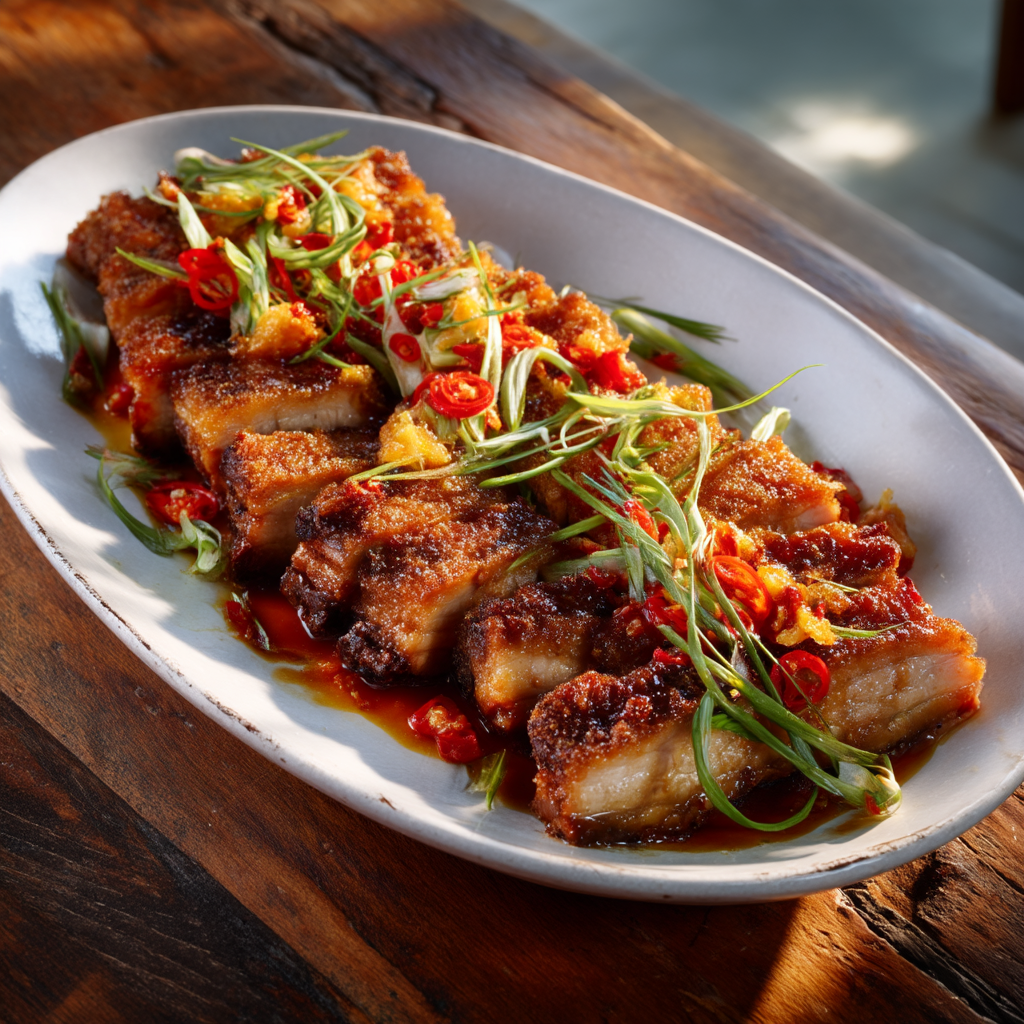
Filipino Birthday Meat Recipe: Crispy Pork Belly with Tamarind-Muscovado Glaze and Fermented Tomato Salsa
Recipe Overview
Dish Name: Crispy Pork Belly with Tamarind-Muscovado Glaze and Fermented Tomato Salsa Cuisine: Filipino | Category: Meat Course | Serves: 4 Prep Time: 30 minutes (plus 3 days fermentation) | Cook Time: 90 minutes | Total Time: 2 hours (active)
Why This Works
Most Filipino birthday spreads default to the same rotation: lechon, caldereta, maybe menudo if someone’s feeling ambitious. This Filipino birthday meat recipe breaks that loop. You’re taking crispy pork belly, the kind that shatters when you bite it, and layering it with a tamarind-muscovado glaze that walks the line between caramelized and aggressive. The fermented tomato salsa isn’t garnish, it’s architecture. The lacto-fermentation pulls out umami you didn’t know tomatoes had, and the funk plays directly into the bagoong-spiked glaze. This is a centerpiece dish that doesn’t require you to roast a whole pig or babysit a braise for six hours. It’s loud, it’s celebratory, and it tastes like nothing else on the table.
Ingredients (Serves 4)
For the Fermented Tomato Salsa (Prepare 3 Days Ahead):
- 400g ripe Roma tomatoes, diced into 1cm cubes
- 15g kosher salt (3.75% by weight)
- 4 cloves garlic, minced
- 10ml patis (fish sauce)
- 5g sugar
- 2 Thai bird’s eye chilies, thinly sliced
For the Pork Belly:
- 800g pork belly, skin-on, cut into a rectangular slab
- 20g kosher salt
- 10g coarse black pepper
- 500ml water
- 3 bay leaves
- 6 cloves garlic, smashed
For the Tamarind-Muscovado Glaze:
- 80g tamarind paste (not concentrate, the chunky stuff you need to strain)
- 100ml water
- 60g muscovado sugar (dark, not light)
- 15ml patis (fish sauce)
- 10g bagoong alamang (fermented shrimp paste)
- 30ml coconut vinegar
- 3 cloves garlic, minced
- 5g cornstarch mixed with 10ml water
For Finishing:
- Neutral oil for frying or roasting
- 2 spring onions, thinly sliced on bias
- 1 red finger chili, sliced into rings
Method
Mise en Place (30 minutes, plus 3 days for fermentation)
Three days before serving, prepare your fermented tomato salsa. Combine diced tomatoes, salt, garlic, patis, sugar, and chilies in a clean glass jar. Press down to submerge tomatoes in their own liquid. Cover with cheesecloth or a loose lid to allow gases to escape. Leave at room temperature (20-24°C) for 3 days, pressing down once daily. You’ll see bubbles and smell a pleasantly sour, funky aroma. This is correct. Refrigerate after fermentation completes.
Score the pork belly skin in a crosshatch pattern, cuts 5mm deep and 1cm apart. Pat completely dry with paper towels. Season aggressively with salt and pepper, rubbing it into the scores. Refrigerate uncovered for at least 4 hours or overnight. The skin needs to dry out.
Measure and prep all glaze ingredients. Strain tamarind paste through a fine-mesh sieve to remove seeds and fibers. You want smooth pulp only.
Poach the Pork Belly (45 minutes)
Bring 500ml water to a simmer in a pot wide enough to fit the pork belly flat. Add bay leaves and smashed garlic. Lower pork belly into the liquid skin-side up. The water should come halfway up the sides of the meat, not cover it. Maintain a bare simmer, 85-90°C. Poach for 40 minutes. This renders some fat and firms up the meat structure without braising it to mush. You’re not cooking it through, you’re setting it up for the next stage.
Remove pork from liquid. Pat dry completely, especially the skin. Let it rest on a wire rack for 15 minutes. The drier the skin, the crispier your result.
Crisp the Pork Belly (30 minutes)
Preheat your oven to 220°C with a rack in the upper third. Place pork belly skin-side up on a wire rack set over a baking tray. Roast for 25-30 minutes until the skin bubbles, crisps, and turns deep golden. You’ll hear it crackle. If your oven has a grill function, hit it with 2 minutes of direct heat at the end for maximum shatter.
Alternatively, heat 2cm of neutral oil in a deep, heavy pan to 190°C. Fry the pork belly skin-side down first, then flip and fry all sides until deeply golden and the skin is blistered. This takes about 12-15 minutes total. The oil method gives you more control over crust development but requires attention.
Let the pork rest on a wire rack for 10 minutes before slicing. Do not skip this. The carryover brings internal temp to 70°C and lets the crust set.
Build the Tamarind-Muscovado Glaze (15 minutes)
While pork rests, heat a small saucepan over medium heat. Add tamarind pulp, water, muscovado sugar, patis, and bagoong. Stir constantly until sugar dissolves. Add minced garlic and coconut vinegar. Bring to a simmer and cook for 8 minutes until the mixture reduces by a third and thickens slightly.
Taste. It should be aggressively sour with a deep molasses sweetness and a funky undercurrent from the bagoong. If it’s too thick, add water by the tablespoon. If too thin, stir in the cornstarch slurry and cook for another 2 minutes. The glaze should coat the back of a spoon but still drip.
Remove from heat. Strain through a fine-mesh sieve if you want a smooth finish, or leave it rustic. Your call.
Slice and Glaze (5 minutes)
Slice the pork belly into 1.5cm thick planks. You want clean cuts that show the crispy skin on top and the layers of meat and fat beneath. Arrange on a serving platter in a slightly overlapping row.
Brush or spoon the tamarind-muscovado glaze generously over each slice. If you have a kitchen torch, hit the glazed surface with flame for 30 seconds to caramelize the sugars. This adds a bitter-sweet char that cuts through the fat. If no torch, you can slide the platter under a hot grill for 2 minutes, watching closely.
Plate and Serve (5 minutes)
Spoon the fermented tomato salsa along the platter, not on top of the pork. You want diners to control the funk level. Scatter sliced spring onions and red chili rings over everything.
Serve immediately while the skin is still crackling. Provide small plates, forks, and napkins. This is a hands-optional dish, but the glaze and salsa make it messy in the best way.
What You Need to Know
The fermented tomato salsa is non-negotiable. Three days feels long, but the lacto-fermentation develops glutamates that canned or fresh tomatoes cannot deliver. If you’re time-constrained, you can make a quick version by mixing diced tomatoes with extra patis, a squeeze of coconut vinegar, and letting it sit for 2 hours. It won’t have the depth, but it will work.
Drying the pork skin is where most people fail. If the skin is wet going into the oven or oil, it steams instead of crisps. Pat it dry, then pat it again. Refrigerating uncovered overnight is the professional move because it dehydrates the skin completely.
The glaze will split if you overheat it after adding the cornstarch. Keep it at a simmer, not a rolling boil. If it does split, pull it off heat and whisk in a tablespoon of cold water to bring it back.
You can prep the glaze and salsa a day ahead. The pork belly can be poached in the morning and crisped right before serving. This makes it a viable birthday dish without the stress.
The Result
You get pork belly with a skin that shatters audibly, giving way to tender, fatty meat with a salt-and-pepper crust underneath. The tamarind-muscovado glaze is sticky, almost lacquer-like, with a sharp sour-sweet punch that prevents the fat from overwhelming. The fermented tomato salsa adds brightness and a funky, savory depth that ties the whole thing back to classic Filipino flavor architecture. It’s celebratory without being fussy, and it scales easily if you’re feeding more than four. The first bite should hit all five taste elements in sequence: sweet from muscovado, salty from patis, sour from tamarind and ferment, bitter from the torched glaze, and umami from bagoong and fermented tomatoes.
Nutrition Information Based on a 2,000 Calorie Diet (Per Serving)
| Nutrient | Amount | % Daily Value |
|---|---|---|
| Calories | 620 kcal | 31% |
| Total Fat | 48g | 62% |
| Saturated Fat | 17g | 85% |
| Cholesterol | 110mg | 37% |
| Sodium | 1,840mg | 80% |
| Total Carbohydrates | 22g | 8% |
| Dietary Fiber | 2g | 7% |
| Sugars | 17g | — |
| Protein | 28g | 56% |
| Vitamin C | 12mg | 13% |
| Iron | 2.4mg | 13% |
| Calcium | 45mg | 3% |
Flavor Balance
Sweet (7/10): Muscovado sugar in the glaze brings a deep molasses sweetness with caramel notes. Tamarind adds fruity sweetness underneath the sour. The fermented tomato salsa contributes natural tomato sugars concentrated by fermentation.
Salty (8/10): Patis appears in both the glaze and the fermented salsa, layering clean saline punch with fermented complexity. Bagoong alamang in the glaze adds shrimp-driven salinity. The pork belly seasoning provides foundational salt that penetrates the meat.
Sour (8/10): Tamarind paste is the sour anchor, sharp and fruity. Coconut vinegar in the glaze adds a rounder, almost nutty acidity. The lacto-fermented tomatoes deliver lactic acid tang that feels brighter and cleaner than straight vinegar.
Bitter (4/10): Minimal but present. Torching the glaze caramelizes sugars past the Maillard zone into light bitterness. Black pepper crust on the pork contributes subtle heat-adjacent bitterness. Bay leaves in the poaching liquid add herbal astringency.
Umami (9/10): This is where the dish lives. Bagoong alamang, patis, and fermented tomatoes stack glutamates aggressively. Pork belly fat carries umami compounds, amplified by the Maillard crust. Garlic in multiple components adds allicin-derived savory depth.
Wine Pairing
1. Technical Match
Weight: This is a full-bodied dish. Pork belly alone registers as heavy, and the sticky glaze plus fermented salsa adds textural and flavor density. You need a wine with enough body to stand next to the fat without disappearing. Medium-full to full-bodied reds or off-dry whites with texture work here.
Acid Balance: The dish itself is highly acidic (tamarind, coconut vinegar, fermented tomatoes), so the wine doesn’t need to do the heavy lifting. Moderate to high acidity in the wine will match the dish’s structure and prevent the pairing from feeling flabby. Avoid low-acid, overripe styles that will clash with the tamarind.
Tannin Interaction: Pork belly fat and protein can handle moderate to medium-high tannins. The fat coats the palate, so structured reds won’t feel astringent. However, overly grippy, young tannins might fight with the sour elements. Look for wines with resolved tannins or inherent softness.
Serving Temperature: Reds at 16-18°C. Any warmer and the alcohol will amplify the dish’s sweetness and feel heavy. Whites at 10-12°C to provide contrast to the rich pork and cut through the glaze.
2. Flavor Architecture
Primary Bridge: The muscovado sugar in the glaze shares caramelized, toffee-like compounds with oak-aged or warm-climate reds. Grenache and Shiraz from Barossa have this in spades. The fermented funk in bagoong and the tomato salsa connects directly to earthy, sous-bois characteristics in aged reds or wines with extended lees contact.
Complementary Elements: The tamarind’s fruity sourness mirrors the red fruit acidity in Grenache. The umami load from patis and bagoong works with the savory, meaty qualities in Shiraz and Mourvèdre. For white pairings, the lactic character in fermented tomatoes harmonizes with malo-influenced Chardonnay or the phenolic texture in skin-contact wines.
Regional Logic: Filipino cuisine’s sour-sweet-funky triad doesn’t map cleanly onto traditional European pairing logic, but Australian wines from warmer climates handle fruit-forward intensity and layered complexity better than restrained Old World styles. Barossa’s ripe fruit can match the glaze’s sweetness without adding more sugar. Clare Valley’s racy Rieslings provide acid backbone and slight residual sugar to bridge both the sour and sweet elements.
Common Mistakes: Avoid bone-dry, high-tannin wines like young Cabernet Sauvignon. The tannins clash with the sour components and make the fermented salsa taste metallic. Stay away from overly oaked Chardonnays where the butter and vanilla fight the tamarind. Do not pair with low-acidity, fruit-bomb styles that can’t handle the dish’s complexity.
3. Recommendations with Scoring
Primary Pairing: Barossa Valley GSM Blend (Grenache-Shiraz-Mourvèdre)
- Intensity Match: 9/10
- Flavor Harmony: 9/10
- Texture Interaction: 8/10
Why: A Barossa GSM brings everything this dish needs. Grenache offers red fruit brightness and natural sweetness that mirrors the muscovado without adding cloying sugar. Shiraz provides mid-palate density, pepper spice, and savory meatiness that locks into the pork belly and bagoong funk. Mourvèdre adds earthy, gamey complexity that enhances the fermented tomato salsa. The blend’s moderate tannins interact beautifully with pork fat, and the wine’s inherent fruit ripeness (without being jammy) matches the glaze’s caramelized intensity. Barossa’s warm-climate profile means the wines have the concentration to stand up to this dish’s aggressive flavor load without being overpowered. The slight rusticity in GSM blends complements the dish’s bold, celebration-style presentation.
Specific Producers: Torbreck “The Steading” GSM, Turkey Flat Grenache-Shiraz-Mataro, Spinifex “Esprit” GSM
Alternative 1: Clare Valley Dry Riesling
- Intensity Match: 7/10
- Flavor Harmony: 8/10
- Texture Interaction: 9/10
Why: Clare Valley Riesling is the precision tool to this dish’s blunt instrument. The wine’s laser-like acidity cuts directly through pork belly fat, resetting your palate between bites. The citrus and stone fruit notes in the Riesling create a flavor bridge with tamarind’s fruity acidity. If the wine has a touch of residual sugar (8-12g/L, which many “dry” Clare Rieslings do), it softens the impact of the glaze’s sweetness and bagoong’s salinity without making the pairing cloying. The minerality in Clare Rieslings adds a textural contrast that’s almost refreshing against the richness. This pairing works best if your guests find the dish’s intensity borderline overwhelming; the Riesling dials everything down by 10% and brings clarity. It’s a more cerebral pairing than the GSM, but it works.
Specific Producers: Grosset “Polish Hill” Riesling, Skillogalee Riesling, Jim Barry “The Lodge Hill” Riesling
Alternative 2: McLaren Vale Grenache
- Intensity Match: 8/10
- Flavor Harmony: 9/10
- Texture Interaction: 7/10
Why: Single-varietal Grenache from McLaren Vale gives you all the fruit-forward sweetness to match the glaze but with silkier tannins and higher acidity than a Barossa GSM. The wine’s red berry and cherry flavors align with the tamarind’s fruity sourness. McLaren Vale Grenache often has a spicy, garrigue-like herbal quality that complements the dish’s garlic and chili components. The tannins are softer here, which means less textural grip but also less risk of clashing with the fermented elements. This is the pairing if you want the celebration vibe of a red but prefer elegance over power. It’s slightly less food-friendly than the GSM because it doesn’t have the structural backbone, but the flavor harmony is excellent.
Specific Producers: Yangarra Estate Grenache, SC Pannell “Koomilya” Grenache, Battle of Bosworth Grenache
HACCP-Compliant Storage and Safety
Safe Cooling and Storage
- Cool leftover pork belly to below 21°C within 2 hours, then to below 5°C within the next 4 hours. Use shallow containers to speed cooling.
- Store pork belly, glaze, and fermented salsa in separate airtight containers in the refrigerator at 0-4°C.
- Fermented tomato salsa remains safe for up to 2 weeks refrigerated due to its low pH (below 4.6). Discard if mold appears or off-odors develop.
- Cooked pork belly and glaze: maximum 3 days refrigerated.
Freezing Guidelines
- Freeze cooked, cooled pork belly in airtight, freezer-safe containers or vacuum-sealed bags for up to 2 months at -18°C or below.
- Do not freeze the fermented tomato salsa. Freezing disrupts the texture and flavor profile.
- Freeze glaze separately in small portions (50ml) for up to 1 month. Thaw overnight in the refrigerator.
Reheating Procedures
- Reheat pork belly to an internal temperature of at least 75°C. Use an oven at 180°C for 15-20 minutes, or fry in a pan with a small amount of oil until the internal temperature reaches 75°C.
- Do not reheat more than once. Discard any portion that has been reheated and not consumed.
- Reheat glaze in a small saucepan over low heat, stirring constantly, until it reaches 75°C. Add water if the glaze has thickened excessively during storage.
Maximum Holding Times
- At room temperature: Do not hold cooked pork or glaze above 5°C for more than 2 hours cumulative time.
- Refrigerated (0-4°C): Pork belly and glaze, 3 days. Fermented salsa, 14 days.
- Frozen (-18°C): Pork belly, 2 months. Glaze, 1 month.
Disposal Guidance
- Discard any cooked pork belly or glaze that has been stored beyond the maximum holding times listed above.
- Discard immediately if you observe discoloration, off-odors, sliminess, or mold on any component.
- Discard fermented salsa if mold, yeast film, or putrid odors develop. A pleasant sour smell is normal; ammonia or rotten odors indicate spoilage.
